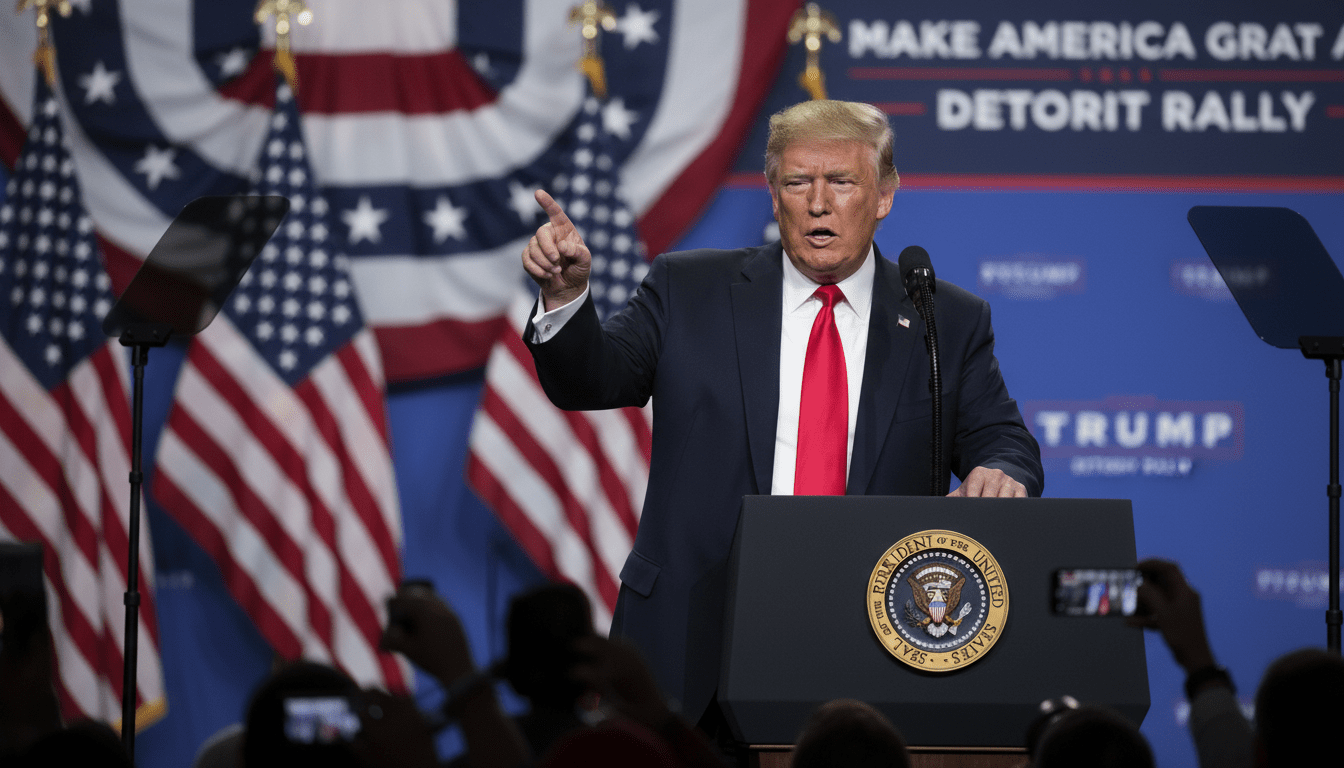
Former President Donald Trump, speaking to a capacity crowd at Huntington Place in downtown Detroit, explicitly named the city as a primary target in a renewed effort to withhold federal grants from jurisdictions that limit cooperation with federal immigration authorities. The announcement marks a significant escalation in rhetoric regarding so-called “sanctuary cities,” posing potential fiscal challenges for Detroit’s municipal budget and law enforcement operations.
In a speech focused on national security and interior enforcement, Trump argued that local ordinances preventing police from asking about immigration status are a direct violation of federal law. He promised that, if elected, his administration would sign an executive order on day one to freeze all Department of Justice and Department of Homeland Security grants to cities refusing full compliance with Immigration and Customs Enforcement (ICE) detainer requests.
“We will end the lawlessness in our cities,” Trump stated from the podium. “If a city wants to prioritize the protection of criminal aliens over the safety of its own citizens, they will do so without a single dime of federal taxpayer money. Detroit has a choice to make.”
The Stakes: Sanctuary City Funding at Risk
While the term “sanctuary city” lacks a strict legal definition, the debate centers on how local law enforcement agencies interact with federal immigration agents. The sanctuary city funding issue is particularly sensitive for Detroit, which relies on millions of dollars in federal aid annually to support community policing, housing development, and infrastructure projects.
According to data from the City of Detroit, federal grants account for a significant portion of the city’s operating budget, particularly within the housing and police departments. Specific funding streams that could be targeted include:
- Community Development Block Grants (CDBG): Used for affordable housing, anti-poverty programs, and infrastructure improvements in Detroit’s neighborhoods.
- Edward Byrne Memorial Justice Assistance Grants (JAG): Critical funding for local law enforcement equipment and training.
- COPS Hiring Program: Grants that assist in the hiring and retention of police officers.
Legal analysts suggest that tying funding conditions to these grants has been attempted before with mixed results in federal courts. However, a renewed executive push could tie up resources in litigation for years, delaying critical projects across Wayne County.
Detroit’s Stance on Immigration Cooperation
Detroit has operated under a “City for All” ordinance since 2007. This local law generally prohibits police officers and city employees from asking individuals about their immigration status unless it is relevant to a criminal investigation. Furthermore, the Detroit Police Department typically does not detain individuals solely on civil immigration violations.
Local officials have long argued that this policy is a matter of public safety, not political defiance. By ensuring that victims and witnesses of crimes are not afraid to come forward due to deportation fears, the city maintains that it can better solve violent crimes and protect all residents.
“The priority of the Detroit Police Department is to stop violent crime,” said a spokesperson for a local civil rights organization during a press briefing following the speech. “Threatening to defund the police in the name of immigration enforcement is counterintuitive and dangerous for Detroit families.”
Impact on Detroit Residents
If the threatened cuts to sanctuary city funding are enacted, the impact would be felt well beyond the immigrant community. A reduction in federal grants would force the City Council to either cut services or raise local revenue to fill the gap.
Residents could potentially see:
- Reductions in neighborhood policing: With JAG and COPS grants frozen, the department may struggle to maintain current staffing levels.
- Stalled housing projects: CDBG funds are vital for rehabilitating blighted homes, a key pillar of Detroit’s ongoing revitalization efforts.
- Strain on social services: Non-profits that rely on pass-through federal funding could face immediate budget shortfalls.
For more on how federal budgets impact local infrastructure, read our analysis on Detroit’s 2024 Infrastructure Spending Plan.
Local Reaction and Legal Realities
Reaction from local political leaders has been swift. While Mayor Mike Duggan’s office has historically emphasized that Detroit follows all federal laws, they maintain that local police should not act as de facto federal immigration agents. Supporters of the “City for All” ordinance argue that the 10th Amendment protects states and cities from being commandeered to enforce federal regulatory programs.
“This is a rehash of policies that were challenged in court four years ago,” said a legal analyst from Wayne State University. “However, the Supreme Court’s composition has changed, and the interpretation of executive power over spending clauses could yield different results this time around.”
Local business owners in Southwest Detroit, a hub for the city’s Hispanic community, expressed concern that such rhetoric creates a chilling effect on the local economy. “When people are afraid to leave their homes or interact with authorities, businesses suffer, and the community fabric weakens,” said one restaurant owner on Vernor Highway.
What Happens Next?
The proposal to cut sanctuary city funding serves as a focal point for the upcoming election cycle, drawing a sharp contrast between federal enforcement priorities and local governance. Detroit officials are likely to begin stress-testing the budget against potential federal shortfalls as a precaution.
As the situation develops, DetroitCityNews.com will continue to track how these federal policy proposals could alter the landscape of neighborhood development and public safety in the Motor City.