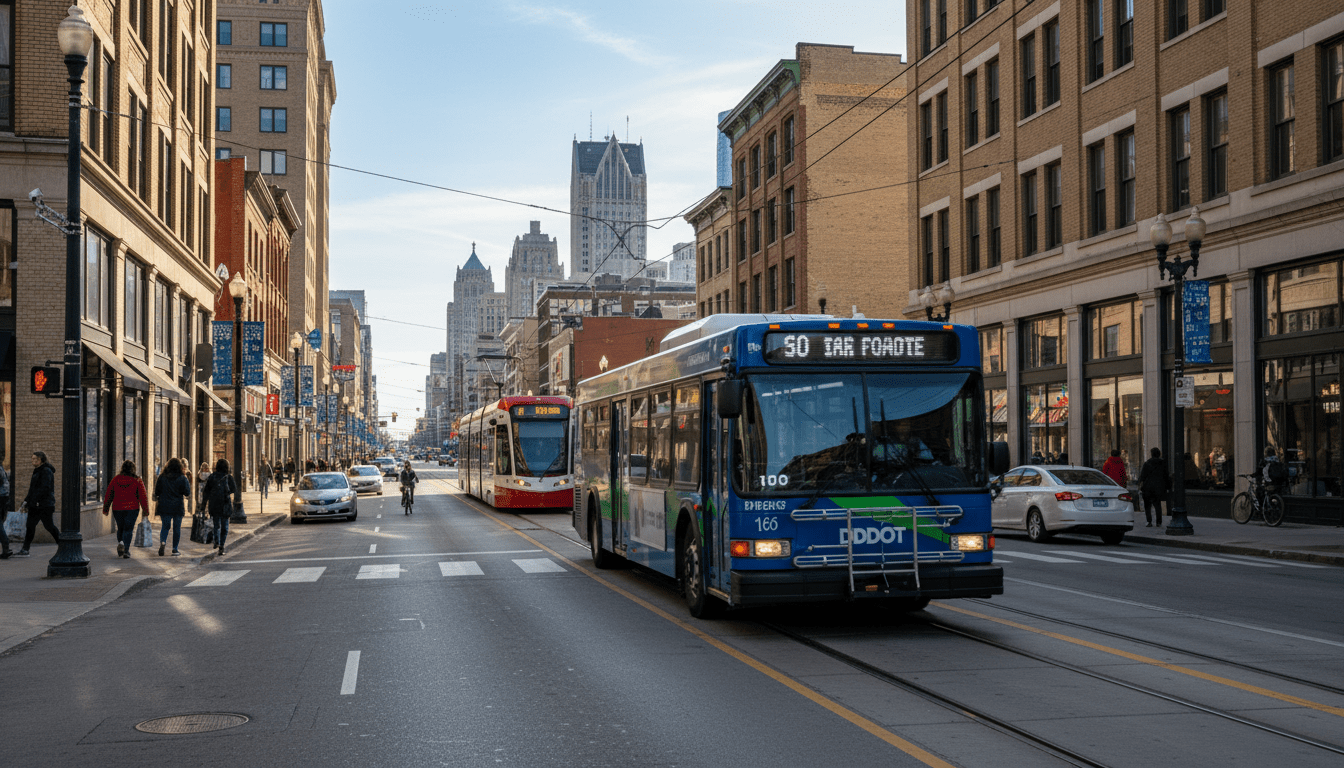
For decades, the narrative of Detroit transportation has been inextricably linked to the personal automobile. As the Motor City, the region’s infrastructure was designed primarily to facilitate car travel, often at the expense of comprehensive public transit. However, 2024 has marked a significant turning point in the city’s approach to mobility. With the rollout of the "DDOT Reimagined" strategic plan and the impending transfer of the QLINE streetcar to the Regional Transit Authority (RTA) of Southeast Michigan, Detroit is witnessing one of its most substantial transit overhauls in recent history.
City officials and transit advocates are pushing for a more integrated, multimodal network designed to connect residents to job centers more reliably. While challenges regarding driver shortages and funding consistency remain, the current roadmap suggests a shift toward a system that prioritizes frequency and regional connectivity over the fragmented services of the past.
DDOT Reimagined: Addressing the Frequency Gap
The centerpiece of the city’s current mobility efforts is the "DDOT Reimagined" plan, a comprehensive strategy aimed at updating the Detroit Department of Transportation’s route network. According to the City of Detroit, the plan was developed following extensive community engagement, aimed at addressing the primary complaint of local riders: reliability and frequency.
The strategic overhaul proposes increasing the number of high-frequency routes—corridors where buses arrive every 15 minutes or less during peak hours. Historically, long wait times have deterred potential riders and penalized those reliant on the system. The new plan targets major arteries such as Gratiot, Woodward, Grand River, and Seven Mile, aiming to stabilize schedules that have fluctuated wildly since the onset of the COVID-19 pandemic.
Furthermore, the plan addresses the need for 24-hour service. For Detroit’s industrial and healthcare sectors, where shift work is common, the lack of overnight transit has long been a barrier to employment. By expanding night service on key connector routes, DDOT aims to align public transit availability with the economic reality of the city’s workforce.
However, implementation faces logistical hurdles. Like many transit agencies nationwide, DDOT has struggled with a shortage of bus operators. To combat this, the city has increased starting wages and introduced quarterly attendance bonuses. "The goal is to stop the cycle of missed runs," a DDOT representative stated during a recent public meeting. "A schedule is only as good as the drivers available to drive it."
Regional Integration: The QLINE and RTA
In a move that signals a shift toward regional cooperation, the QLINE streetcar system is transitioning from a private non-profit operation to public ownership under the Regional Transit Authority (RTA) of Southeast Michigan. Since its launch in 2017, the QLINE has operated along a 3.3-mile stretch of Woodward Avenue, largely funded by philanthropic donors and corporate sponsors.
The transfer to the RTA is widely viewed by policy experts as a step toward sustainable long-term funding. Under the RTA, the QLINE becomes eligible for state and federal transit dollars that were previously inaccessible to the non-profit operator, M-1 Rail. This transition aligns with the RTA’s broader mission to create a connected system across Wayne, Oakland, Macomb, and Washtenaw counties.
While the streetcar has faced criticism for its limited range and interaction with mixed traffic, its integration into the RTA suggests it will serve as a spine for future rapid transit expansions. This move could eventually allow for a unified payment system, enabling riders to transfer seamlessly between the QLINE, DDOT buses, and the suburban SMART bus system—a feature long requested by commuters who navigate the city-suburb divide.
Impact on Detroit Residents
The evolution of Detroit transportation options has direct implications for the daily lives of residents. Data from the U.S. Census Bureau indicates that approximately one in four Detroit households does not own a vehicle. For these residents, reliable transit is not a luxury but a necessity for accessing healthcare, grocery stores, and employment.
For job seekers, the proposed improvements to the Detroit economy and local labor market hinge on mobility. If the "DDOT Reimagined" plan succeeds in reducing wait times, it effectively expands the radius of accessible jobs for residents without cars. A commute that previously took 90 minutes due to missed transfers could theoretically be reduced significantly with high-frequency connections.
Moreover, the focus on multimodal options extends beyond buses and streetcars. The expansion of the MoGo bike-share network and the increased presence of e-scooters have provided "last-mile" solutions for neighborhoods not immediately adjacent to major corridors. However, these options raise concerns regarding infrastructure safety, as Detroit’s vast road network still largely lacks protected bike lanes outside of the greater downtown area.
Background & Data: The Cost of Commuting
Transportation costs remain a significant burden for Detroit families. According to the Center for Neighborhood Technology, transportation is often the second-largest household expense after housing. In a city where car insurance rates are among the highest in the nation, the reliance on private vehicles exerts a heavy financial toll.
The push for public transit is also tied to trends in Detroit housing and development. Developers are increasingly looking at "transit-oriented development" (TOD) models, where density is concentrated near transit hubs. The success of such developments along the Woodward corridor suggests that demand exists for a lifestyle less dependent on private automobiles.
Recent data from the American Public Transportation Association (APTA) suggests that for every $1 invested in public transportation, approximately $4 in economic returns is generated for the community. City officials are banking on this multiplier effect to spur further investment in neighborhood corridors that have seen slower recovery rates than the downtown core.
What Happens Next?
The coming months are critical for Detroit transportation. Residents can expect to see gradual changes to bus schedules as DDOT recruits more drivers and implements the new route structures. The transfer of the QLINE to the RTA is expected to be finalized within the year, which may lead to discussions regarding potential northward expansion into Oakland County—a topic that has been politically sensitive for decades.
Additionally, the Detroit People Mover continues to experiment with operational changes. After implementing a zero-fare pilot program to boost ridership, the loop system is being re-evaluated to determine its role in the broader ecosystem, particularly as a connector for convention visitors and downtown workers.
For more detailed maps and schedules regarding the new routes, residents are encouraged to visit the official City of Detroit DDOT portal. As the infrastructure evolves, the true test will be whether these disparate systems—bus, streetcar, and regional transit—can finally operate as a cohesive unit serving the needs of all Detroiters.