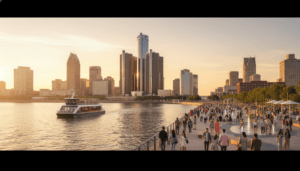
As Detroit moves further into the middle of the decade, the city’s property market is witnessing a distinct evolution. No longer defined solely by the initial “renaissance” narrative of the mid-2010s, commercial real estate in Detroit is maturing into a complex ecosystem characterized by adaptive reuse, neighborhood decentralization, and a recalibration of office space demand. For investors, business owners, and residents alike, 2025 promises to be a year of strategic adaptation rather than unbridled speculation.
Data from recent market analyses suggests that while the pace of new ground-up office construction has slowed, the industrial and mixed-use sectors are accelerating. This shift reflects broader national trends but is uniquely shaped by Detroit’s specific geography and economic history. According to reports from the City of Detroit and local economic development agencies, the focus has firmly shifted toward maximizing the utility of existing structures and expanding commercial viability beyond the downtown core.
The “Flight to Quality” in Office Spaces
One of the most significant trends shaping commercial real estate in Detroit for 2025 is the “flight to quality” within the office sector. As hybrid work models solidify into permanent corporate policies, the sheer volume of square footage is becoming less important than the quality and amenities of the workspace.
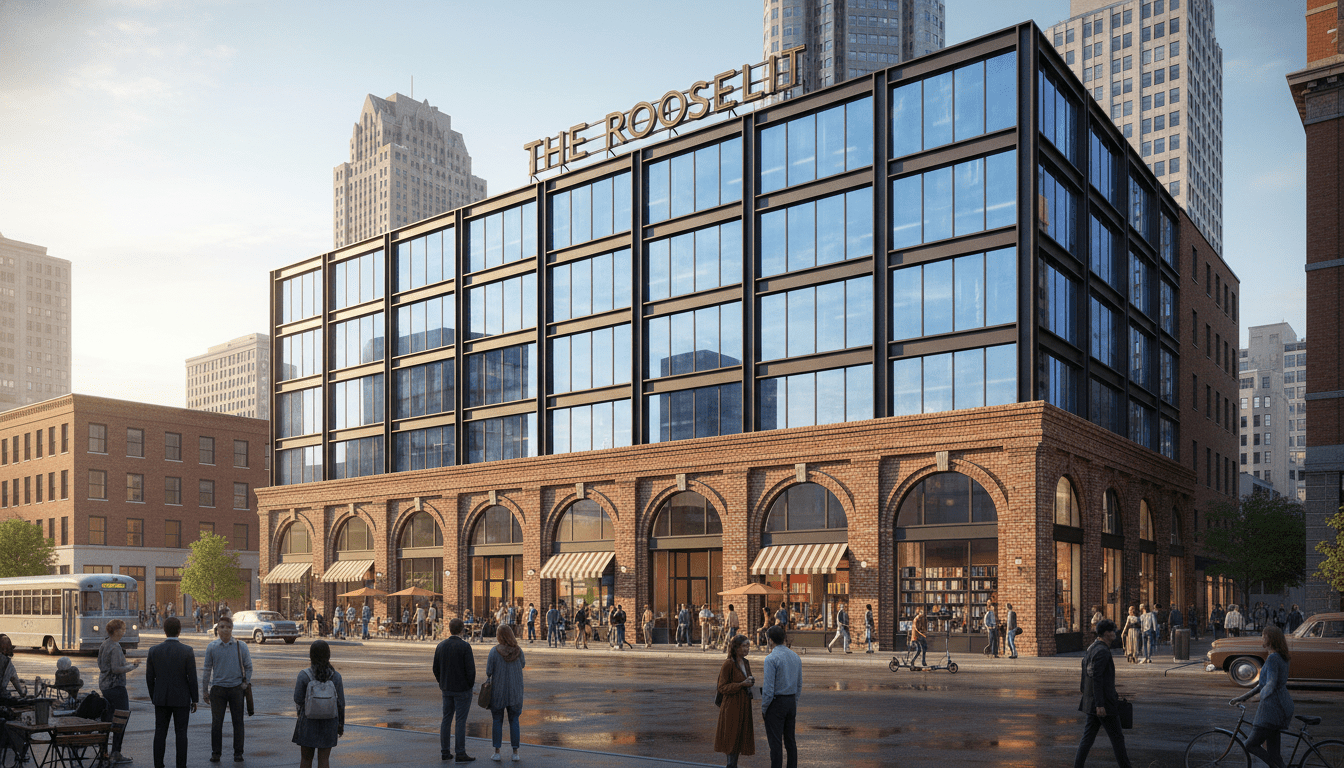
Major downtown landlords are finding that Class A buildings—those offering premium amenities, sustainability certifications, and modern technological infrastructure—are maintaining healthy occupancy rates. In contrast, older Class B and C office stocks are facing higher vacancy rates. This bifurcation is driving a wave of renovations.
“Tenants are demanding spaces that earn the commute,” said a representative from a prominent Detroit-based brokerage firm during a recent economic forecast panel. “If employees are coming in three days a week, the office needs to be a destination, not just a cubicle farm.”
This trend is also fueling the conversion of obsolete office buildings into residential or hospitality uses. Several historic structures in the Central Business District are currently undergoing feasibility studies for such conversions, a move that city planners hope will increase downtown’s residential density and support 24-hour street-level retail.
Industrial Boom and Logistics
While the office market recalibrates, the industrial sector remains a powerhouse for the regional economy. Driven by the near-completion of major infrastructure projects, including the Gordie Howe International Bridge, demand for logistics and manufacturing space is at an all-time high.
Areas such as Southwest Detroit and the I-75 corridor are seeing increased interest from logistics companies looking to capitalize on Detroit’s position as a critical trade gateway between the United States and Canada. According to regional market reports, vacancy rates for industrial properties in metro Detroit remain historically low, pushing rental rates upward.
This surge is not limited to large-scale distribution centers. Small-bay industrial spaces—often used by local contractors, artisans, and light manufacturers—are also in short supply. For the local economy, this signals a robust underpinning of trade and production that helps insulate the city from fluctuations in the consumer service sector.
Neighborhood Commercial Corridors
Perhaps the most impactful trend for long-term residents is the decentralization of investment. For years, the headline story of commercial real estate in Detroit was focused heavily on Woodward Avenue, Downtown, and Midtown. In 2025, the narrative is expanding significantly into the neighborhoods.
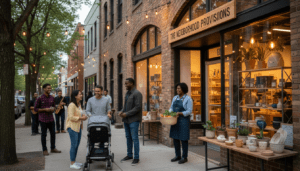
Supported by the Strategic Neighborhood Fund and various city-led initiatives, commercial corridors like designated sections of Livernois, McNichols, and Grand River are seeing renewed activity. The goal is to create “20-minute neighborhoods” where residents have access to goods, services, and entertainment without needing to commute downtown.
Developers are increasingly looking at smaller-scale, mixed-use projects in these areas. These developments typically feature ground-floor retail with residential units above. This model not only revitalizes vacant storefronts but also addresses the city’s need for diverse housing options.
Check out our recent coverage on Detroit neighborhood development projects to see how specific communities are transforming vacant lots into community hubs.
Impact on Detroit Residents
For the average Detroiter, these high-level real estate trends translate into tangible changes in daily life. The stabilization of the commercial market means more consistent local jobs, particularly in construction, property management, and logistics.
However, the influx of investment into neighborhood corridors brings complex dynamics regarding affordability and gentrification. As commercial rents rise in improved areas, long-standing local businesses may face pressure. The City of Detroit has implemented programs aiming to assist legacy businesses in purchasing their buildings or securing long-term leases to mitigate displacement.
Local business owners have expressed cautious optimism. “We are seeing more foot traffic and more investment in streetscapes,” mentioned the owner of a café on the Avenue of Fashion. “The challenge now is ensuring that the growth is inclusive and that local entrepreneurs have access to the capital needed to participate in this real estate boom.”
Adaptive Reuse: The Green Strategy
Sustainability is becoming a non-negotiable aspect of commercial real estate in Detroit. With the automotive industry’s pivot to electric vehicles (EVs) anchored in Michigan, the real estate sector is following suit with a focus on green building practices.
Adaptive reuse—the process of repurposing existing buildings rather than demolishing and rebuilding—is Detroit’s superpower. The city’s rich inventory of pre-war architecture provides a unique opportunity to develop sustainable real estate with a lower carbon footprint than new construction. Notable projects, such as the rehabilitation of Michigan Central Station by Ford, have set a global standard for how heritage sites can anchor modern innovation districts.
In 2025, expect to see this trend trickle down to smaller scale projects. Warehouses are becoming food halls, and old banks are becoming co-working spaces. This not only preserves the city’s architectural character but also appeals to younger workforces who prioritize sustainability and authenticity.
Market Outlook and What Happens Next
Looking ahead to the remainder of 2025, analysts predict a stabilizing market. Interest rates, while having cooled from their peaks, still dictate a cautious approach to leverage. This means fewer speculative mega-projects and more calculated, equity-heavy investments.
The synergy between public infrastructure investment and private capital will likely define the success of commercial ventures this year. As transit options improve and the connective tissue between neighborhoods strengthens, commercial property values are expected to see a more uniform appreciation across the city, rather than being concentrated solely in the downtown core.
For investors, the window for “easy” flips has closed. The market now rewards long-term operational expertise and genuine community engagement. For Detroiters, this maturation of the market offers the hope of sustained economic growth that is woven into the fabric of the city’s diverse neighborhoods.