In classrooms across Detroit, the atmosphere regarding student expression and safety has shifted dramatically in recent years. What might have once been dismissed as a dark doodle or an edgy sketch is now increasingly treated as a potential warning sign, prompting immediate and serious intervention. For one Detroit family this week, the protocols surrounding a student drawing turned a quiet school day into a complex interaction with local authorities, highlighting the delicate balance between child safety and student expression in the Detroit Public Schools Community District (DPSCD).
The transition from a classroom observation to a full-scale school incident is governed by a strict set of state and district guidelines. As educators in Wayne County face rising pressure to identify mental health crises and potential threats early, the interpretation of student artwork has become a critical, albeit subjective, frontline of defense.
From Art Class to Administration: The Trigger
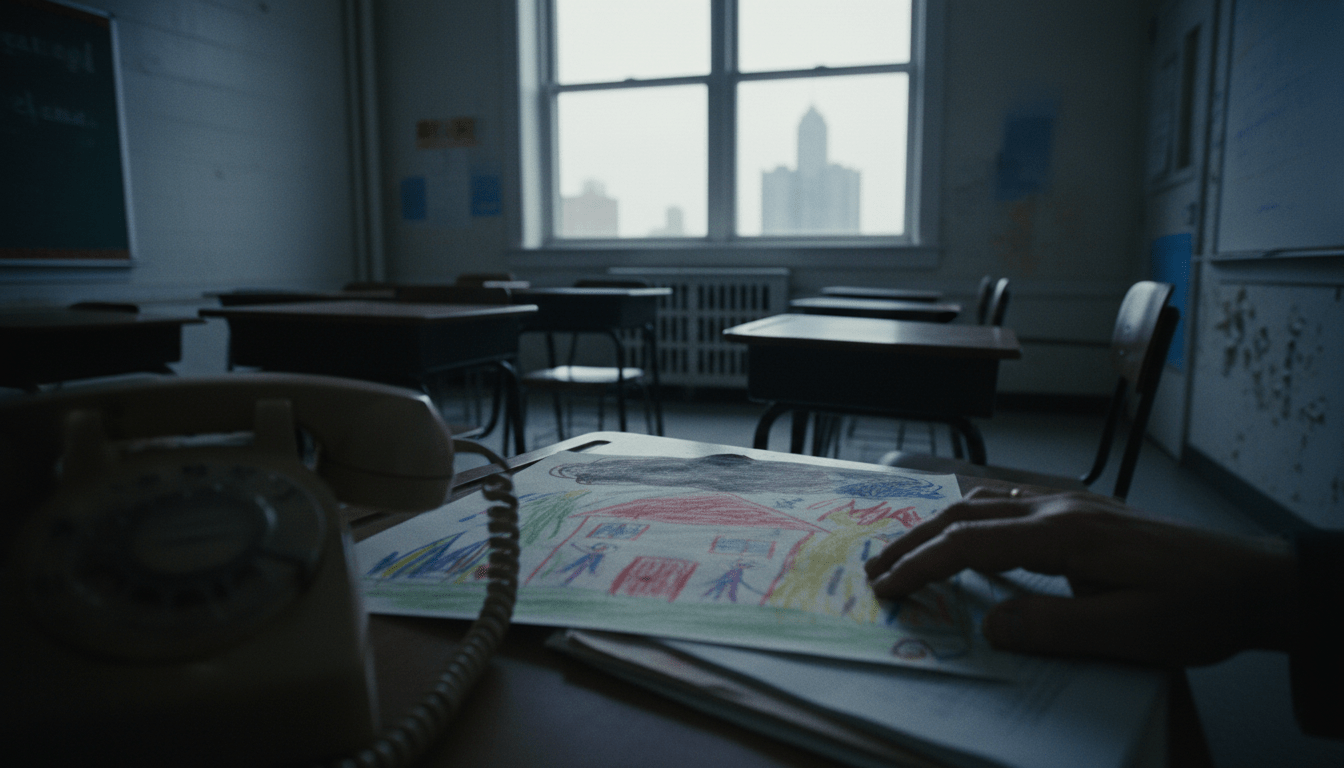
According to reports from local educational advocates, the process often begins quietly. In a recent anonymized case reflecting growing trends in the district, a teacher at a Detroit elementary school noticed a student creating an image that depicted scenes of concern. While privacy laws protect the specific details of the minor involved, the nature of the image—containing themes that could be interpreted as a cry for help or a threat—triggered an immediate teacher concern.
Under Michigan’s Child Protection Law, teachers are designated as mandated reporters. This means they are legally required to report any suspicion of child abuse, neglect, or danger to the student or others. There is no grey area for hesitation. If a teacher sees a student drawing that suggests a child is in danger or poses a danger, the school administration is notified immediately, setting off a chain reaction that often results in authorities involved in the matter.
“The threshold for reporting has changed,” explains a representative from a local Detroit educational advocacy group. “After the tragedies we have seen in Michigan and nationwide, the directive to teachers is clear: when in doubt, report. We would rather apologize for a misunderstanding than mourn a tragedy.”
The Role of Authorities and Threat Assessment
Once a drawing is flagged, the school’s behavioral health team or safety officers conduct a preliminary assessment. In cases where the imagery suggests immediate harm, the Detroit Public Schools Community District Police Department (DPSCD PD) or local precinct officers may be called to assist. This escalation is part of a standard “threat assessment” protocol used throughout Michigan schools.
Data from the Michigan Department of Health and Human Services (MDHHS) suggests that referrals related to student mental health and safety concerns have risen sharply post-pandemic. The involvement of law enforcement is not always punitive; often, it is a procedural step to ensure immediate safety before handing the case over to social workers or mental health professionals.
For the student, this often means a removal from class, a search of their belongings, and an interview. For the parents, it results in a sudden phone call that can be terrifying. The impact on Detroit neighborhoods is palpable, as trust between the community and the policing of schools remains a sensitive topic.
Impact on Detroit Residents and Families
For parents in Detroit, understanding these protocols is essential. A report of a school incident involving police can be stigmatizing. However, district officials emphasize that the primary goal is child safety, not criminalization. When authorities involved review a student drawing, they are looking for intent, means, and underlying trauma.
Local child psychologists warn that while safety is paramount, the process can be traumatic for the child if not handled with care. “A drawing is a snapshot of a child’s mind, which is often messy and processing difficult things,” says Dr. Alan Miller, a psychologist familiar with urban education settings. “It is crucial that when the school calls authorities, the response is comprised of support services, not just uniformed officers.”
This approach impacts the Detroit culture and social landscape, where families are asking for more counselors in schools rather than more police. The district has been making strides in this area, utilizing funds to increase the number of social workers available to de-escalate these situations.
Understanding the Mandated Reporter Law
It is vital for Detroit residents to understand that teachers act under the penalty of law. According to the State of Michigan, failure to report a suspicion triggered by something like a student drawing can result in misdemeanor charges for the educator. This legal binding forces a “safety first” approach that can sometimes feel aggressive to parents but is designed to prevent children from falling through the cracks.
The process typically follows these steps:
- Identification: The teacher spots the concerning behavior or artwork.
- Reporting: The teacher notifies the principal and, if abuse is suspected, calls Children’s Protective Services (CPS).
- Assessment: School safety officers or police evaluate immediate threat levels.
- Intervention: The family is contacted, and mental health resources are deployed.
The Future of School Safety in Detroit
As the conversation around mental health in schools evolves, DPSCD continues to refine its approach. The district aims to balance the legal requirements of reporting with the holistic needs of the student body. For now, Detroit parents should be aware that their children’s creative expressions in school are subject to scrutiny in an era of heightened vigilance.
While a call from the school regarding a student drawing is distressing, it is a function of a system on high alert, striving to ensure that every school incident is managed before it can escalate into a tragedy.