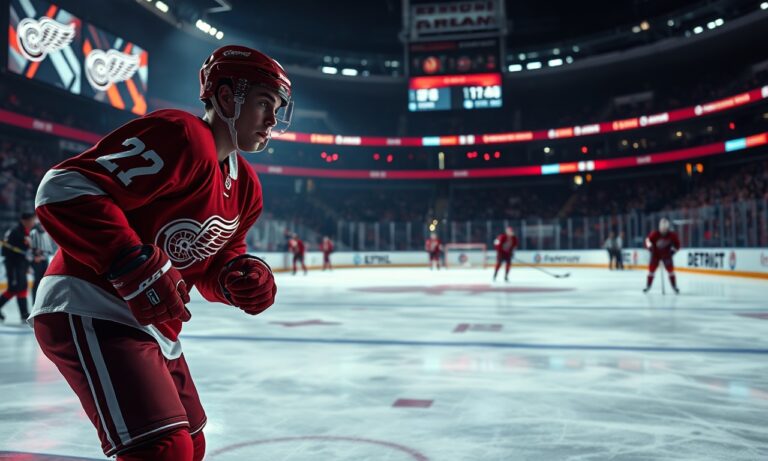
The Detroit Red Wings’ approach to the 2026 NHL Draft is already drawing attention from fans looking for meaning beyond the usual talent evaluation. With Michigan-based supporters coining a “Team Ferrari” theme for the organization’s presumed direction—pairing speed-minded play with disciplined development—Detroit hockey discussions are shifting from just “who will be picked” to how the franchise is building its next competitive identity.
While the NHL Draft itself is still months away, the conversation is taking shape as the Red Wings weigh roster needs, prospect readiness, and the broader development pipeline that Detroit fans follow closely. For residents, that pipeline matters: it’s one of the few local sports narratives that can affect community spirit, youth participation, and how families invest in hockey programs over the long term.
Red Wings selections and the ‘Team Ferrari’ draft theme
The “Team Ferrari” label—used by fans and echoed in Detroit-area online chatter—turns a scouting abstraction into a recognizable storyline: quickness, structured speed through the neutral zone, and high-tempo decision-making. That framing is consistent with how NHL talent evaluators often describe modern skill sets: players who can create time and space with mobility, shot creation, and efficient transitions.
Detroit’s draft strategy, sometimes summarized as NHL Draft picks Detroit that balance immediate projection with longer-term development, is not solely about flashy traits. It also reflects how the Red Wings have historically managed risk—targeting prospects who fit the system and can be coached into defensive reliability without losing offensive upside.
What Detroit prospects 2026 might include
Because the draft class is still evolving, the most accurate way to describe “what the Red Wings might do” is through principles, not guarantees. Team-building models generally steer teams toward:
- Skaters with gap control—players who can defend in motion and support the forecheck.
- Creation under speed—puck movers who can handle pressure and make plays during transitions.
- Secondary development fit—prospects likely to improve through the organization’s coaching and conditioning structure.
- Team needs by position and contract timeline—how the Red Wings’ existing roster and prospects align over the next few years.
That’s where the “Team Ferrari” theme has resonance for Detroit fans: it translates team needs into a style of play they can recognize. The Red Wings do not officially brand a draft theme publicly, but fan interpretation often mirrors the organization’s real goals—especially when a team is emphasizing speed and system play.
Impact on Detroit residents: more than just hockey headlines
Even in a sport as geographically concentrated as the NHL, the 2026 NHL Draft Detroit conversation can have ripple effects across Metro Detroit. For families, a strong pipeline of local-area interest can influence participation in youth hockey—whether through private programs, community rinks, or tournament travel. For small businesses tied to sports culture—equipment vendors, local gyms, and game-day hospitality—prospect excitement can also increase foot traffic around training sessions and watch parties.
At the same time, the draft is not an immediate economic engine on its own. Still, hockey’s local ecosystem is built on expectation and planning. As the U.S. Census Bureau has documented in general terms, family spending patterns and local participation in organized sports depend on affordability and access, which are shaped by community-level investment and stable youth programming.
For Detroit residents, the more meaningful impact is indirect: a high-quality prospect pool can help sustain fan engagement, keep hockey culture visible, and motivate institutions—from schools with athletic programs to community nonprofits—to maintain support for youth pathways.
Detroit economy and sports culture: why interest matters
Sports-driven culture does not automatically equal job creation, but it can reinforce local identity and spending around seasonal activities. According to the Michigan Economic Development Corporation (MEDC), the state’s efforts to grow quality-of-life and community programming are part of broader strategies to retain residents and attract talent—elements that sports organizations contribute to indirectly through visibility and community engagement.
When residents follow draft stories—especially those tied to a recognizable “team identity” like “Team Ferrari”—they’re also participating in a shared civic narrative. That narrative, in turn, keeps the Red Wings present in Detroit media and family routines long after the season ends.
Background & data: how NHL teams plan for the future
The phrase “Detroit prospects 2026” may sound like a promise, but it’s ultimately a snapshot of evaluation timelines. NHL organizations typically blend scouting and analytics with medical assessments and character interviews. Draft boards reflect both the availability of players at specific picks and the organization’s roster forecast.
To ground how planning works, it helps to note what the NHL and independent analysts generally emphasize: prospects develop at different speeds, and teams often draft for long-term system fit as much as raw talent. The league’s structure—where drafted players may spend years in junior leagues, college hockey, or European systems—means teams must project readiness while also preserving developmental upside.
For Detroit’s fans, the most relevant “data” is less about public stats on individual prospects (which can change quickly) and more about organizational behavior: how the Red Wings have used picks in past drafts to gradually strengthen positions of need.
Red Wings selections and the local storyline ahead of draft night
While the Red Wings’ exact selections for 2026 cannot be confirmed yet, the style of team-building implied by the “Team Ferrari” theme aligns with broader NHL patterns. Detroit’s front office is operating in a league where skating advantage and fast transition play are increasingly valuable, particularly against teams that sit back defensively and try to play for counterattacks.
As the draft approaches, local coverage will likely focus on two questions: which prospects match the Red Wings’ system, and which players can contribute in the near-to-mid term without disrupting the development plan. For residents, that means watching not only draft boards but also prospect progress in their current leagues—statistics can shift, but trends in pace, responsibility, and two-way performance often become clearer over time.
What happens next for fans following ‘Team Ferrari’
The next meaningful steps for Detroit supporters will come through official and semi-official channels: prospect interviews, regional scouting reports, and team updates as summer development camps and training schedules solidify. Detroit-based fans will also look for alignment between the Red Wings’ stated development priorities and the traits those priorities imply.
Here’s what to watch as the Detroit Red Wings 2026 NHL Draft story develops:
- Prospect performance trends in junior, NCAA, and European leagues—especially skating and decision-making under pressure.
- Injury and conditioning updates that can change a player’s draft range.
- Organizational depth needs—how current roster and contract planning shape the draft mix.
- System fit signals from interviews and coaching guidance, which often reveal what traits the team values most.
For now, “Team Ferrari” remains a fan-made interpretation, not an official banner. But in Detroit, those interpretations matter because they offer a way to follow an uncertain process with a coherent storyline—turning a distant draft into a local, seasonal conversation about identity, development, and the kind of hockey the city wants to see next.
Editor’s note: This article focuses on the emerging “Team Ferrari” draft theme and Detroit’s broader draft planning context. Any final Red Wings selections will be confirmed only when the NHL Draft order and Detroit’s picks are officially announced.