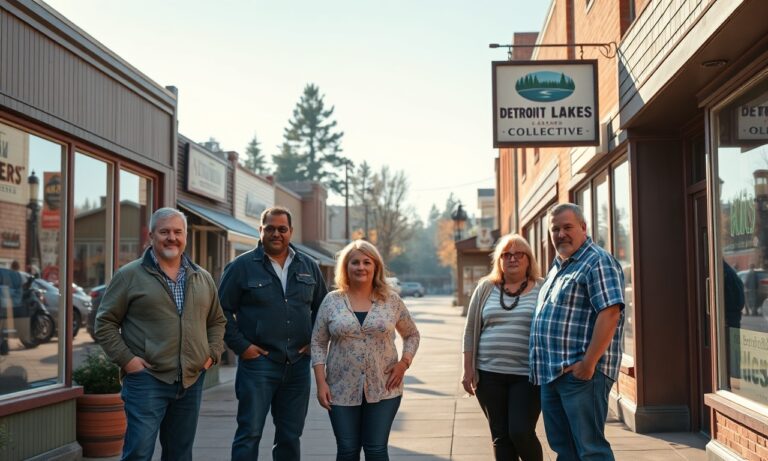
DETROIT LAKES, MN — The economic landscape of Detroit Lakes received a substantial boost this week as the Minnesota Department of Employment and Economic Development (DEED) announced a $425,000 grant awarded to the Rural Minnesota Concentrated Employment Program (CEP). This funding marks a significant investment in the region’s workforce infrastructure, aiming to address critical labor market challenges and enhance economic stability for residents in Detroit Lakes and the surrounding Becker County area.
The grant comes at a pivotal time for Greater Minnesota, where rural communities are increasingly seeking innovative solutions to close the gap between employer demand and available skilled labor. According to state officials, this allocation is part of a broader initiative to empower local organizations that have a proven track record of driving economic mobility.
Targeting Workforce Barriers in Detroit Lakes
The Rural Minnesota CEP, headquartered in Detroit Lakes, has long been a cornerstone of workforce development in the region. The $425,000 infusion is expected to be utilized to expand programming that directly removes barriers to employment. While specific allocations often vary, DEED grants of this nature typically target job training, childcare shortages, and transportation hurdles that prevent willing workers from entering the labor market.
According to data from Minnesota Department of Employment and Economic Development (DEED), the state has been aggressively funding initiatives that solve the “quiet crisis” of rural economic development—specifically the lack of support systems that allow parents and non-traditional students to work. Local business owners in Detroit Lakes have frequently cited a lack of available staff not due to a lack of interest, but due to logistical constraints facing potential employees.
“Investments like these are not just about numbers; they are about allowing our local businesses to keep their doors open and allowing families to put food on the table,” said a spokesperson for the local economic development authority during a recent roundtable on rural growth. “When the state partners with effective local agencies like the Rural Minnesota CEP, we see immediate returns in our community’s vitality.”
Impact on Local Residents and Families
For the residents of Detroit Lakes, this DEED grant in Detroit Lakes signifies more than just administrative funding; it translates into tangible resources. The Rural Minnesota CEP operates by connecting job seekers with training and employers with qualified candidates. With these additional funds, the organization is poised to enhance its outreach and support services.
Residents struggling to navigate career changes or those re-entering the workforce after a hiatus may find expanded opportunities for upskilling. Furthermore, if a portion of the funds is directed toward childcare solutions—a common focus for recent DEED awards—local families could see relief in one of the most strained sectors of the rural economy. Reducing the cost or increasing the availability of childcare allows dual-income households to remain in the area rather than relocating to larger metropolitan centers like Minneapolis or Fargo.
For more insights on how funding impacts regional growth, read our coverage on the local economic outlook for the coming fiscal year.
Background: DEED’s Commitment to Greater Minnesota
This $425,000 grant is part of a competitive funding cycle managed by DEED. The department has emphasized equitable economic growth, recognizing that rural hubs like Detroit Lakes serve as critical economic engines for the state. The Rural Minnesota CEP serves a 19-county area, but its operations in Detroit Lakes are central to its mission in the northwest region.
Statistically, the region has maintained a low unemployment rate, yet this presents its own set of challenges. A low unemployment rate often indicates a tight labor market where employers struggle to fill vacancies. DEED’s strategy involves upskilling the existing population and bringing marginalized groups into the workforce.
Recent reports indicate that for every dollar invested in workforce development in rural Minnesota, the local economy sees a multiplier effect of nearly $3.00 in generated economic activity. This suggests that the $425,000 grant could generate over $1.2 million in economic impact for the Detroit Lakes area over the next few years.
The Role of Rural Minnesota CEP
The Rural Minnesota CEP is a non-profit agency that has operated for over 50 years. They are a WorkForce Center partner and specialize in designing programs that adapt to the changing needs of the rural economy. From helping high school students understand career pathways to assisting dislocated workers, their scope is broad.
Local leaders anticipate that this specific grant will help the CEP modernize its approach to digital literacy and remote work readiness, which are increasingly relevant in a post-pandemic economy. By equipping Detroit Lakes residents with modern skills, the region becomes more attractive to outside investment and remote-friendly corporations.
Readers interested in the history of local development initiatives can explore our archive on workforce development trends in the Midwest.
What Happens Next?
Following the announcement, the Rural Minnesota CEP will begin the implementation phase of the grant. Residents can expect to see new program announcements or expanded service hours in the coming months. DEED will monitor the progress of the grant to ensure key performance indicators—such as the number of individuals placed in jobs or trained—are met.
City officials in Detroit Lakes are optimistic. The infusion of state funds relieves pressure on local municipal budgets and allows for a more aggressive approach to economic retention. As the Rural Minnesota CEP deploys these funds, the focus will remain steadfast on ensuring that Detroit Lakes remains a vibrant place to live and work.
“This is a win for Detroit Lakes,” a local chamber representative noted. “It validates the hard work our community organizations do every day and ensures we have the fuel to keep moving forward.”