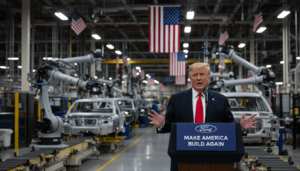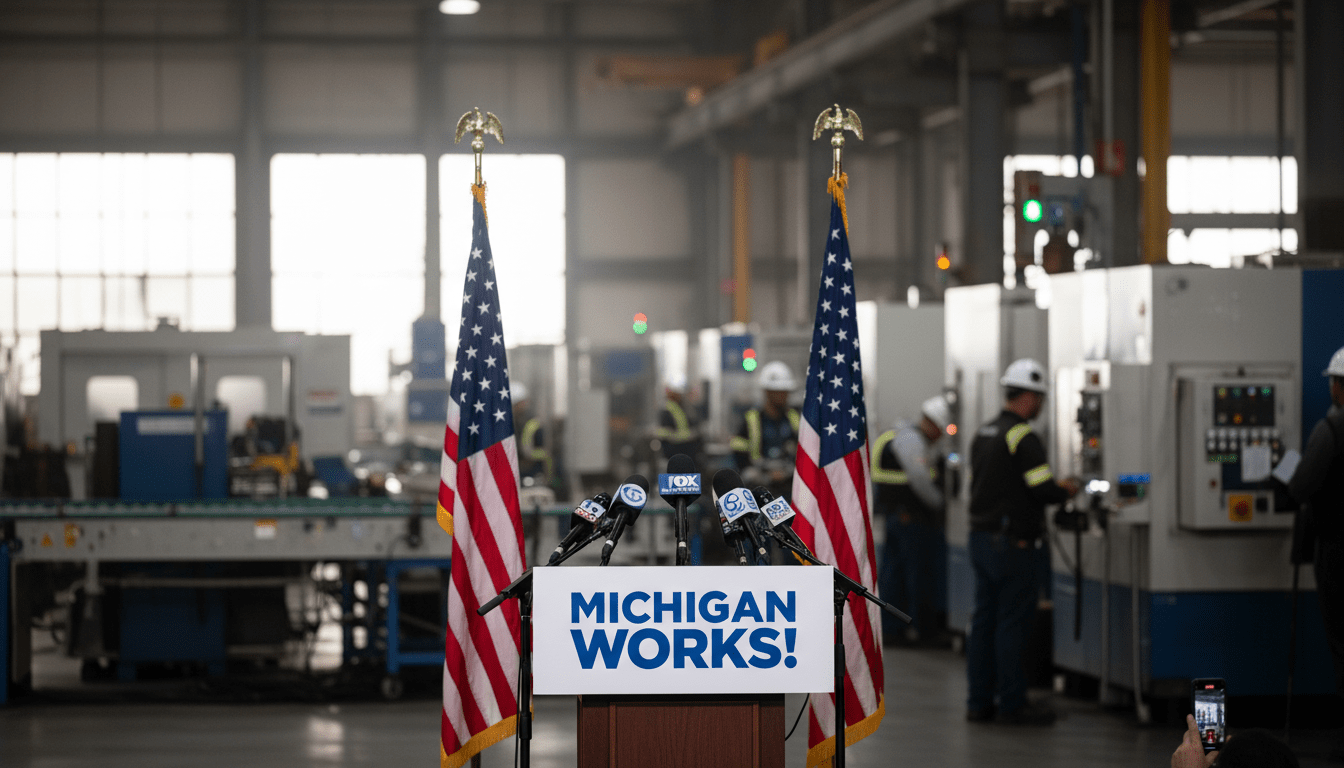
FORMER PRESIDENT Donald Trump returned to Michigan this week, delivering a speech centered on economic populism, protectionist trade policies, and a promise to revitalize the American automotive industry. Speaking to a crowd in a key battleground state, Trump positioned himself as the only candidate capable of saving Detroit’s manufacturing base from what he described as an “economic disaster” caused by foreign competition and electric vehicle mandates.
While the rhetoric resonated with attendees concerned about inflation and job security, economic experts and industry analysts suggest that some of the specific proposals—particularly regarding aggressive tariffs—could carry significant costs for consumers and the very industries they are designed to protect. This report examines the key claims made during the Michigan address and contextualizes them with data relevant to Detroit residents and the local auto sector.
The Claims: Tariffs and the Auto Industry
A central pillar of Trump’s economic pitch in Michigan was the imposition of steep tariffs on imported vehicles. Trump reiterated threats to place 100% to 200% tariffs on cars manufactured in Mexico and China, arguing that this would force automakers to move production back to the United States, specifically benefitting Michigan.
“We are going to put a tariff on them, and they are not going to come into this country,” Trump said, referring to Chinese automakers building plants in Mexico. “We are going to bring the car business back to Detroit.”
The Fact Check: While tariffs can protect domestic manufacturers from low-cost foreign competition, they often result in higher prices for consumers. According to the Tax Foundation and analyses from the Peterson Institute for International Economics, tariffs are paid by domestic importers, not the exporting country, and those costs are typically passed down to buyers.
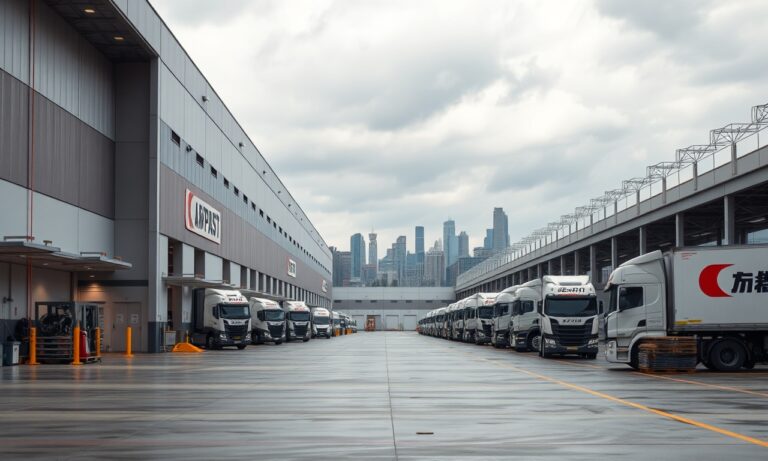
For the Detroit Three—General Motors, Ford, and Stellantis—the supply chain is deeply integrated globally. Parts often cross the border multiple times before a vehicle is finished. Experts warn that blanket tariffs could disrupt these supply chains, raising production costs for Detroit automakers and potentially leading to higher vehicle prices for American families, rather than an immediate return of jobs.
Impact on Detroit Residents and Inflation
Trump also attacked the current administration’s record on inflation, claiming that the cost of living has become unsustainable for Michigan families. He cited rising grocery and energy prices as evidence of a failing economy.
The Reality: Inflation has indeed been a major burden for Detroit residents over the past two years. However, the rate of inflation has cooled significantly in recent months. Data from the U.S. Bureau of Labor Statistics for the Detroit-Warren-Dearborn area shows that while prices remain higher than pre-pandemic levels, the year-over-year increase has slowed, aligning more closely with historical averages.
However, economists warn that Trump’s proposed policies—specifically mass deportations and universal tariffs—could reignite inflation. A sudden contraction in the labor force and increased taxes on imports would likely drive up the cost of goods and services, disproportionately affecting working-class households in Detroit who spend a larger percentage of their income on basic necessities.
The EV Mandate Controversy
Another focal point of the speech was the transition to electric vehicles (EVs). Trump claimed that the push for EVs is a “mandate” that will destroy the U.S. auto industry and hand dominance to China.
Context for Detroit: The transition to EVs is complex. While federal regulations do set emissions targets that encourage EV production, there is no outright ban on gasoline cars in the immediate term. Furthermore, Detroit automakers have already committed billions of dollars to EV infrastructure. For instance, read our coverage on General Motors’ recent investments in local battery plants.
Local labor leaders have expressed mixed views. The United Auto Workers (UAW) union has emphasized the need for a “just transition” that ensures EV jobs pay as well as traditional assembly jobs. While Trump argues EVs will kill jobs, industry leaders in Detroit argue that failing to compete in the EV market would ultimately render American automakers obsolete on the global stage.
Local Reactions: Business and Labor
Reaction to the speech across Metro Detroit has been divided along predictable lines. Local manufacturing suppliers, who have struggled with volatility in the sector, expressed cautious optimism about the promise of protectionism.
“If tariffs mean more orders for my shop in Warren, I’m listening,” said one local parts supplier who requested anonymity. “But if it means my raw steel costs double, then we are out of business. It’s a fine line.”
Meanwhile, environmental advocates and some economic development officials worry that reversing course on green energy investments could hurt Michigan’s emerging battery belt. See our analysis on Michigan’s clean energy job growth for a deeper dive into this sector.
What Happens Next?
Michigan remains a pivotal state for the 2024 election. With the margins expected to be razor-thin, economic messaging is critical. Trump’s strategy relies on mobilizing voters who feel left behind by the post-pandemic recovery, specifically leveraging anxiety within the auto industry.
As the election cycle intensifies, Detroit residents can expect more visits and more specific promises. The challenge for voters will be to distinguish between campaign rhetoric and economic reality, weighing the potential benefits of protectionism against the tangible risks of higher consumer costs and trade wars.