As temperatures across Southeast Michigan begin their annual descent, the City of Detroit and regional transportation officials are mobilizing resources to address the challenges of the coming season. For motorists in the Motor City, the transition to winter requires not just a change in driving habits, but an understanding of municipal plowing protocols and snow emergency regulations.
The Department of Public Works (DPW) has confirmed that its fleet is prepared for winter operations, focusing on keeping major thoroughfares clear to prevent gridlock and accidents. With historical data from the Michigan State Police indicating a spike in collision rates during the first significant snowfall events of the year, local authorities are emphasizing the critical need for preparation regarding Detroit winter driving conditions.
DPW Mobilization and Plowing Priorities
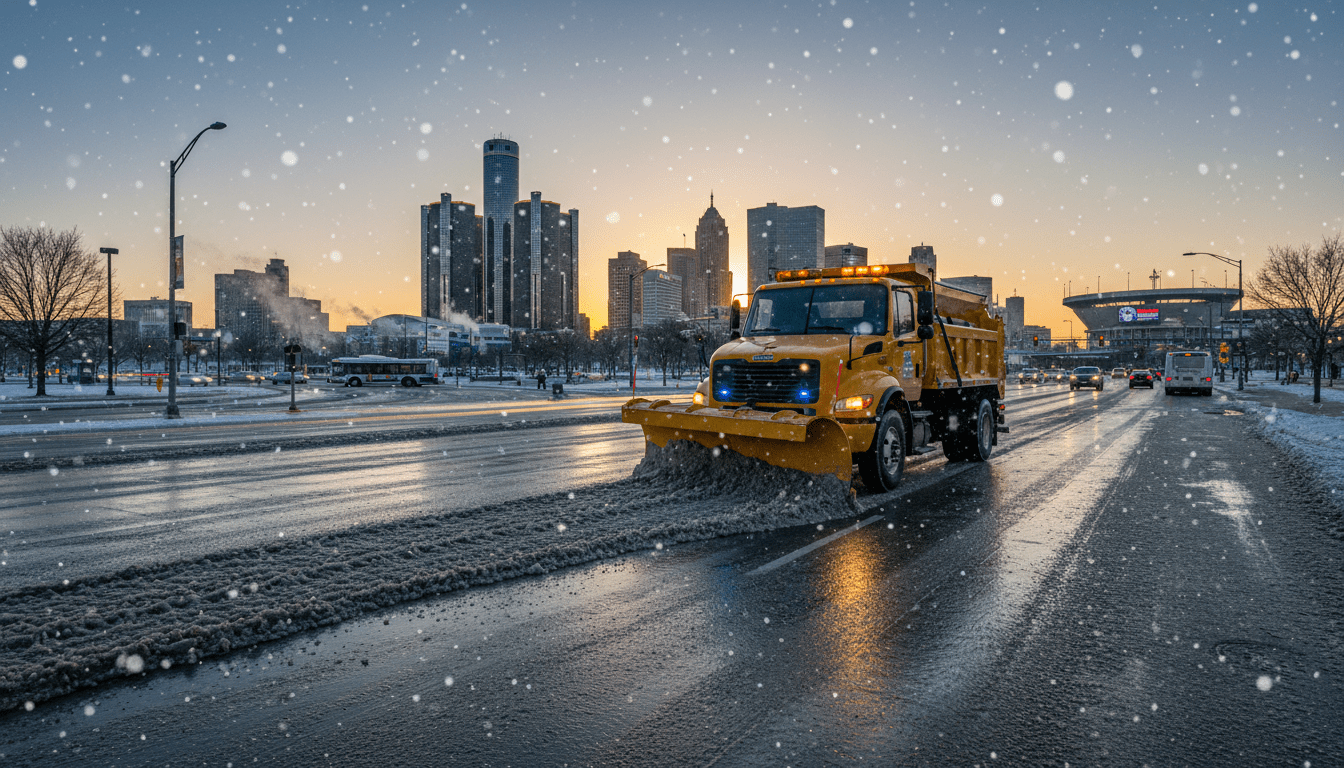
The City of Detroit operates under a tiered system for snow removal, a strategy designed to maximize mobility for the greatest number of residents and emergency vehicles. According to the City of Detroit Department of Public Works, the primary focus during any winter weather event is the clearance of major arteries.
The city maintains approximately 673 miles of major thoroughfares. These Level 1 roads are the first to be salted and plowed. Crews typically deploy as soon as snow accumulation begins, often pre-treating bridges and overpasses where black ice forms most rapidly. Local officials have stated that the goal is to maintain pavement contact on these high-volume roads to facilitate transit and commerce.
Residential streets, however, fall under a different protocol. Plowing on residential streets generally occurs only after a snowfall accumulation of six inches or more. When this threshold is met, the city initiates a contract with private vendors to clear a 10-foot path down the center of residential streets. This distinction is vital for residents to understand, as it affects commute times and accessibility in neighborhoods from Corktown to East English Village.
Impact on Detroit Residents: Snow Emergencies and Parking
One of the most immediate impacts of severe winter weather on Detroit residents is the declaration of a Snow Emergency. When the city expects significant accumulation, officials may declare an emergency to ensure plows can operate effectively. This has direct legal and logistical consequences for vehicle owners.
During a declared Snow Emergency, parking is prohibited on streets marked with Red Signs. Residents are required to move their vehicles to off-street locations, such as driveways or designated parking lots. Failure to adhere to these regulations can result in ticketing and towing. This enforcement is not merely punitive; a single parked car can prevent a plow from clearing an entire block, creating hazardous patches of ice and packed snow that persist for days.
For residents in high-density neighborhoods with limited driveway space, this often requires coordination with neighbors or utilizing permissible side streets that are not designated as emergency routes. We recently covered alternative parking strategies in Detroit neighborhoods, which becomes particularly relevant during these enforcement periods.
Accident Data and Safety Statistics
The urgency of these preparations is underscored by crash data. According to the Michigan Office of Highway Safety Planning (OHSP), winter weather conditions—including snow, slush, and ice—account for a significant percentage of annual traffic crashes in Wayne County. Statistics show that speed is the number one factor in winter-related accidents.
Law enforcement officials frequently note that posted speed limits are intended for dry, ideal conditions. When pavement is compromised by ice or slush, drivers are legally obligated to reduce speed to a “careful and prudent” level. The Michigan State Police have reiterated that four-wheel drive vehicles, while helpful for acceleration, do not provide an advantage in braking distance on icy surfaces.
Furthermore, tire safety remains a critical but often overlooked factor. Mechanics and safety experts consistently advise that all-season tires lose traction significantly once temperatures drop below 45 degrees Fahrenheit, regardless of snow presence. The hardening of the rubber compound leads to decreased grip, contributing to the slide-offs frequently seen on the Lodge Freeway and I-75 during freeze-thaw cycles.
Infrastructure and Future Outlook
Looking beyond immediate plowing, the city is also contending with the long-term effects of winter on infrastructure. The freeze-thaw cycle is the primary driver of pothole formation, a perennial issue for Detroit drivers. Water seeps into pavement cracks, expands when freezing, and breaks the asphalt apart. This creates a secondary hazard for Detroit winter driving, as motorists swerving to avoid potholes on slick roads increase the risk of side-swipe collisions.
Recent investments in road resurfacing aims to mitigate some of this damage, but the sheer volume of precipitation and temperature fluctuation remains a challenge. You can read more about the ongoing Detroit infrastructure projects intended to improve road durability against severe weather in our previous reporting.
What Drivers Should Do Now
As the season progresses, local authorities advise residents to sign up for Detroit alerts to receive immediate notifications regarding snow emergencies. Keeping an emergency kit in the vehicle—containing blankets, a shovel, sand or kitty litter for traction, and jumper cables—is strongly recommended. With the city’s plowing fleets ready to deploy, the shared responsibility for safety now shifts to the motorists navigating Detroit’s winter landscape.