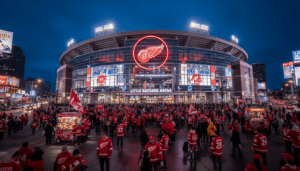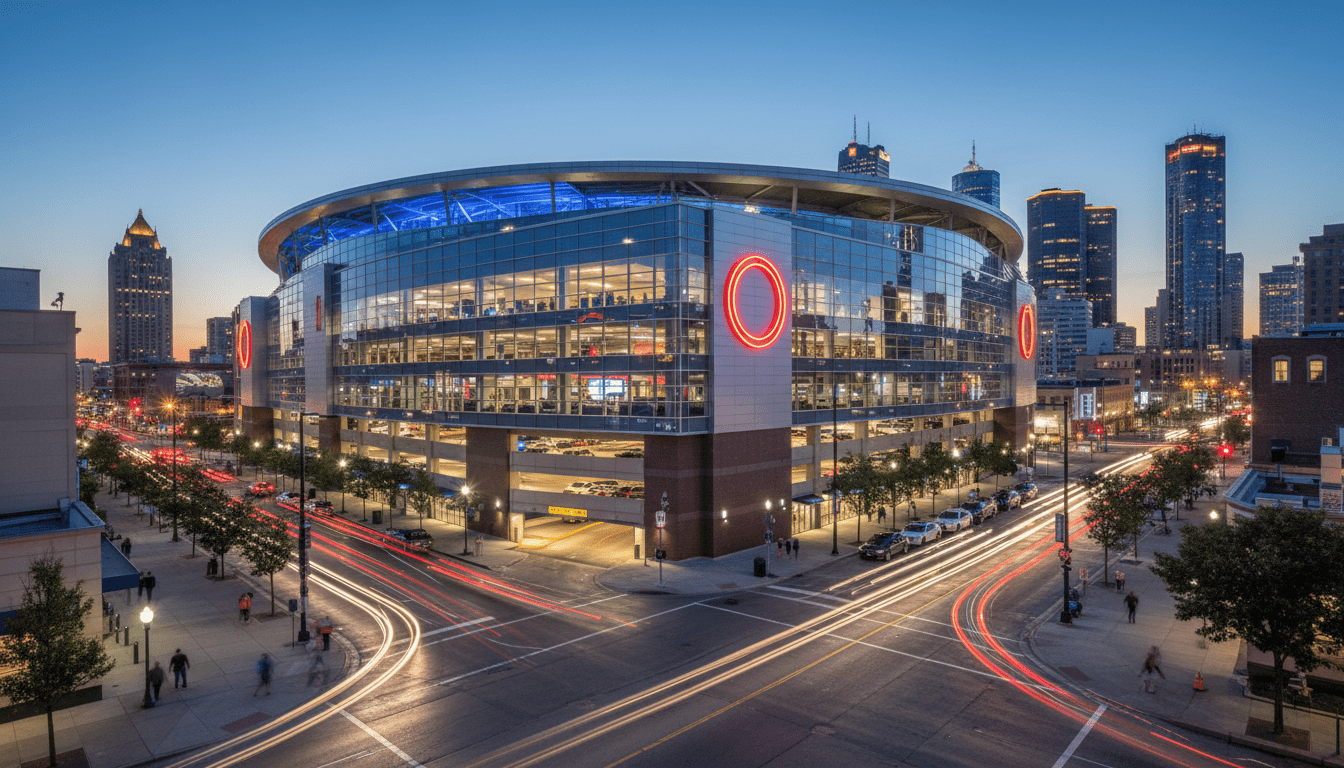
For thousands of Detroit Red Wings and Pistons fans descending on Woodward Avenue, the game begins long before the puck drops or the tip-off occurs. Securing Little Caesars Arena parking has become a logistical hurdle that reflects the broader transformation of downtown Detroit.
As the 2024-2025 events season accelerates, attendees are navigating a landscape defined by dynamic pricing, app-based reservations, and a shifting physical footprint due to ongoing construction in The District Detroit. While the arena offers state-of-the-art amenities inside, the infrastructure surrounding it remains a focal point of debate regarding urban planning, accessibility, and cost for both visitors and locals.
The Current State of Little Caesars Arena Parking
Since opening in 2017, Little Caesars Arena (LCA) has anchored the entertainment district, but parking availability has fluctuated. According to Olympia Development of Michigan, which manages The District Detroit, the area boasts thousands of parking spaces within a 10-minute walk of the venue. However, the reality on the ground often involves a complex web of official garages, third-party surface lots, and street parking restrictions.
The primary options for attendees remain the dedicated structures, including the Little Caesars Arena Garage, the UWM Garage, and the Temple West Garage. These facilities offer proximity but come at a premium. Data from parking aggregators like ParkWhiz and Ticketmaster indicates that prime spots can range significantly in price depending on the event tier—a playoff game or a major concert often triggers surge pricing that can exceed $50 to $80 per vehicle.
This dynamic pricing model is standard in major metropolitan areas, yet it continues to catch some suburban commuters off guard. The reliance on digital pre-booking has also intensified. “We strongly encourage guests to book parking in advance,” is a common refrain in pre-event emails sent by ticket vendors. This shift toward cashless, pre-arranged parking is intended to streamline traffic flow on Cass Avenue and Woodward Avenue, reducing the idling time that contributes to downtown congestion.
Impact on Detroit Residents and Neighborhoods
The ripple effects of Little Caesars Arena parking extend well beyond the ticket holders. Residents in the adjacent Cass Corridor and Brush Park neighborhoods frequently report spillover traffic and enforcement issues on event nights.
Local community meetings have often highlighted the tension between residential permit parking and event attendees seeking free or cheaper alternatives on side streets. The City of Detroit’s Municipal Parking Department has responded over the years by adjusting enforcement zones and hours to protect resident access, particularly along the expanding residential blocks north of I-75.
For local business owners, the situation is a double-edged sword. While foot traffic increases sales for bars and restaurants outside the arena, parking scarcity can deter regular patrons who are not attending the game. “It changes the rhythm of the night,” says one manager of a venue on Peterboro Street. “Regulars know to avoid the area on game nights unless they have a reserved spot, which changes our demographic entirely for those few hours.”
Development and the Loss of Surface Lots
A critical factor changing the parking equation is the ongoing development within The District Detroit. The long-term vision for the area, heavily supported by city planners, involves replacing surface parking lots with mixed-use buildings, hotels, and residential units. This aligns with modern urbanist goals to create a dense, walkable city core rather than a sea of asphalt.
However, the transition period creates friction. As surface lots are fenced off for construction of new District Detroit development projects, the total inventory of cheaper, open-air parking spots temporarily decreases. This pushes more drivers toward the structured garages or further away to lots serviced by the QLINE.
Urban planning experts argue this is a necessary pain for long-term gain. By reducing the convenience of surface parking, cities often encourage the use of public transit. Yet, Detroit’s reliance on cars remains high. The QLINE streetcar and the People Mover provide connectivity, but for fans coming from the outer suburbs, the “last mile” problem persists, making the parking garage the default choice.
Pricing Trends and Transportation Alternatives
Financial accessibility remains a concern. While premium parking is readily available for those willing to pay, budget-friendly options are becoming scarcer close to the venue. Attendees looking to save money are increasingly parking in the Central Business District (CBD) or near Wayne State University and utilizing the QLINE to bridge the gap.
Ride-sharing services have also altered the traffic flow. Dedicated zones for Uber and Lyft drop-offs attempt to mitigate the need for parking spaces, but they contribute to curb congestion on service drives. The Detroit Police Department frequently manages traffic diverts on Woodward to accommodate this volume, a strategy that prioritizes pedestrian safety but can lead to post-game bottlenecks.
The ongoing expansion of public transit infrastructure is seen as the only sustainable long-term solution to the Little Caesars Arena parking crunch. Until regional transit offers a viable alternative for suburbanites, the demand for downtown storage of vehicles will remain high.
Future Outlook for The District
Looking ahead, the parking situation at Little Caesars Arena will likely continue to tighten as density increases. Proposals for new residential towers and the potential for a new hotel attached to the arena imply that land currently used for cars will eventually house people and businesses.
For now, fans are advised to adopt a strategy of preparation: utilizing booking apps weeks in advance, carpooling, or parking further south in the city and taking the streetcar north. As Detroit continues its revitalization, the convenience of a surface lot right next to the stadium is becoming a relic of the past, replaced by the complexities—and vibrancy—of a dense urban environment.