As the summer heat settles over Southeast Michigan, thousands of families across the city are shifting their focus toward the upcoming academic year. The annual search for the right educational fit has become a complex journey for local families, as the landscape of Detroit schools continues to diversify through specialized district programs, expanding charter networks, and evolving school choice policies. For parents navigating this transition, the decision-making process involves balancing academic performance, proximity, and the unique extracurricular offerings that define modern urban education.
The Current State of Detroit Schools
The educational environment in Detroit is currently defined by a competitive but collaborative effort to recover from pandemic-era learning losses. According to the Michigan Department of Education (MDE), enrollment trends in the Detroit Public Schools Community District (DPSCD) have shown signs of stabilization, yet the competition for students remains high. This year, the district has emphasized its ‘Level Up’ programs, designed to offer intensive support in literacy and mathematics, addressing core concerns raised by parents during community forums.
Beyond the traditional district, Detroit’s charter school sector continues to play a massive role in the local ecosystem. Organizations such as the Grand Valley State University Charter Schools Office, which authorizes several schools in the city, report a steady interest in niche curriculum models, including Montessori-inspired elementary programs and STEM-focused high schools. This variety forms the backbone of the modern Detroit schools guide, providing a spectrum of choices that did not exist a generation ago.
Impact on Detroit Residents and Families
For the average Detroit resident, the wealth of options brings both opportunity and logistical challenges. Unlike smaller suburban districts, where the neighborhood school is often the default choice, Detroit parents often act as ‘educational consumers.’ This requires significant time spent researching school report cards, safety data, and transportation feasibility.
Local education advocates note that transportation remains one of the primary hurdles for families exercising school choice. While DPSCD provides busing for many of its students, charter schools often operate on different logistical models, sometimes requiring parents to arrange their own transportation or utilize neighborhood carpools. This dynamic has led many parents to prioritize proximity, revitalizing the demand for high-quality schools within specific Detroit neighborhoods.
The Role of Specialized Programming
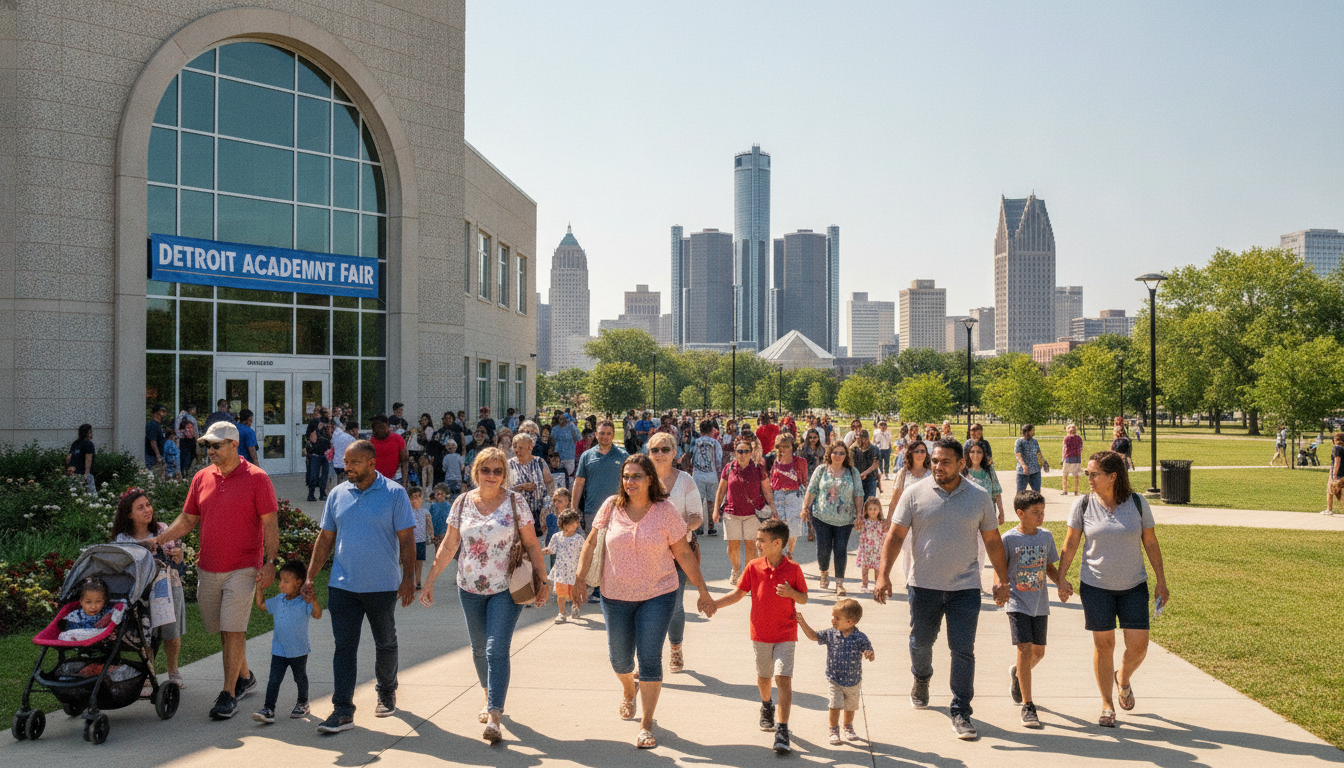
In response to shifting demands, many Detroit schools have introduced specialized tracks to attract and retain students. From the Detroit School of Arts to dual-enrollment programs that allow high schoolers to earn college credits at Wayne State University, the focus has shifted toward career readiness. Parents interviewed at recent enrollment fairs expressed a particular interest in vocational training and the ‘trades,’ reflecting a broader economic trend in the city toward manufacturing and technology sectors.
Background and Data: Enrollment Trends
Data from the U.S. Census Bureau and the Michigan Center for Educational Performance and Information (CEPI) highlights a shifting demographic within the city’s student population. While the overall school-age population in Detroit has seen fluctuations, the retention rate of students within the city limits has become a key metric for success. In previous years, ‘educational flight’ to neighboring districts was a common concern; however, recent investments in school infrastructure have begun to mitigate this trend.
A recent report by the Detroit Education Research Partnership suggests that the quality of school facilities is a major factor in parental choice. The district’s $700 million facility master plan, which includes the renovation of historic buildings and the construction of new campuses, is seen as a direct response to these findings. Residents can read more about Detroit infrastructure developments that are shaping the city’s future and how these school renovations fit into the larger municipal strategy.
Understanding School Choice and Enrollment Deadlines
Navigating the enrollment window is critical for families seeking placement in high-demand institutions. Most Detroit schools, including both district-run and charter options, have established application timelines that begin as early as February for the following fall. For the upcoming semester, many schools are still accepting ‘School of Choice’ applications, though seats in specialized ‘Examination High Schools’ like Cass Tech or Renaissance are typically filled months in advance.
According to official guidance from the Detroit Public Schools Community District enrollment office, parents are encouraged to complete their paperwork by mid-August to ensure student placement and transportation scheduling. Missing these deadlines can often result in students being placed on waiting lists or missing out on preferred elective tracks.
What Happens Next: Looking Toward the Fall
As the first bell of the school year approaches, the focus will shift from enrollment to implementation. Education officials are closely watching how new state funding, approved in the latest Michigan budget, will be distributed to support at-risk students and special education services within the city. For parents, the hope is that these investments translate into smaller class sizes and more robust after-school programming.
The upcoming semester represents a pivotal moment for Detroit schools as they strive to prove that the city’s educational system can meet the needs of a modern, diverse workforce. With community support and continued investment, the goal remains clear: ensuring that every child in Detroit has access to a world-class education right in their own backyard. Families are encouraged to attend upcoming ‘Back to School’ rallies and orientation sessions to stay informed and engaged with their child’s educational journey.