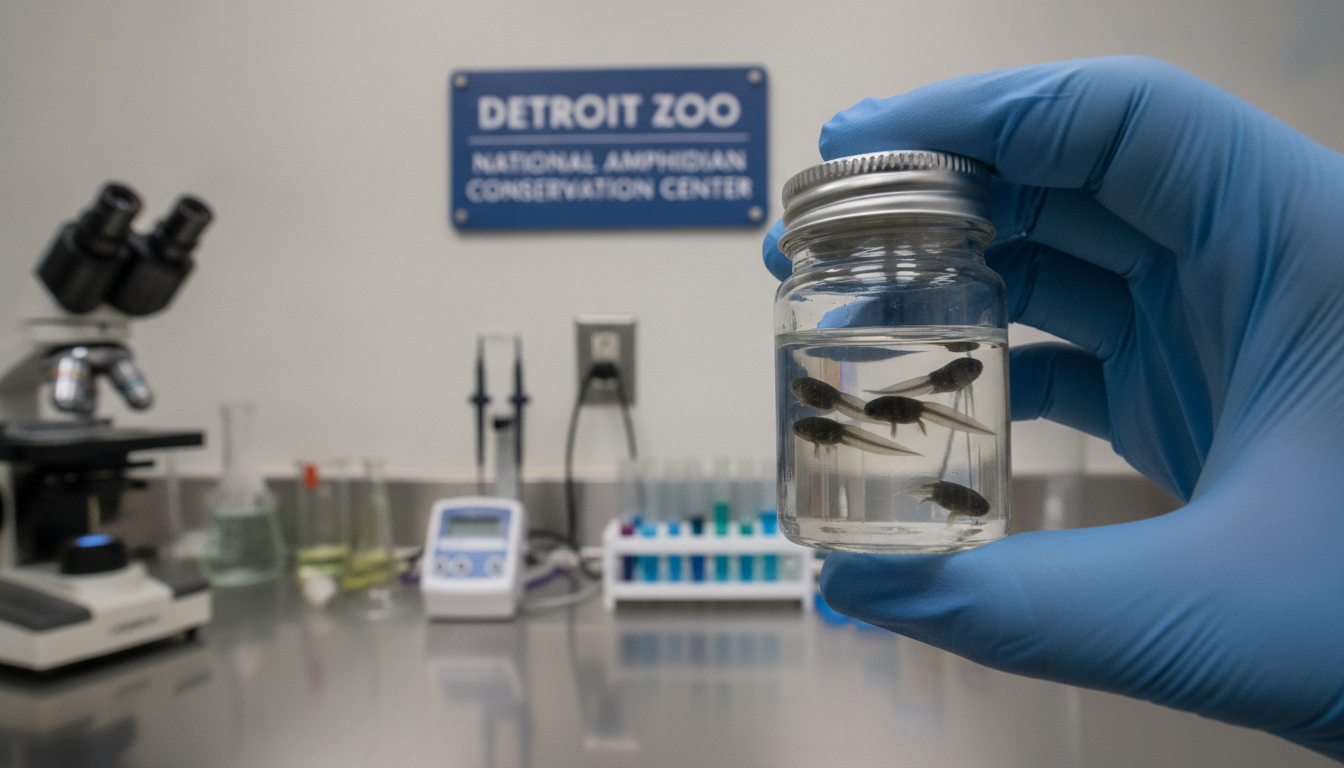
The Detroit Zoo has reached a significant milestone in its long-standing commitment to global biodiversity, successfully raising and shipping thousands of endangered tadpoles for release into the wild. As one of the leading institutions in North American amphibian recovery, the Detroit Zoological Society (DZS) continues to play a pivotal role in preventing the extinction of species that are vital to their respective ecosystems. This year, the focus remains on the Wyoming toad and the Puerto Rican crested toad, both of which face severe threats in their natural habitats.
A Leader in Wildlife Conservation
According to the Detroit Zoological Society, the facility’s National Amphibian Conservation Center (NACC) has become a primary breeding ground for species that have all but disappeared from the wild. The program involves a meticulously managed process where adult toads are bred in a controlled environment that mimics their natural seasonal cycles. Once the eggs hatch into tadpoles, they are carefully monitored by specialized zookeepers before being transported to protected wetlands and ponds.
Data from the Association of Zoos and Aquariums (AZA) indicates that the Detroit Zoo is among a select group of facilities capable of maintaining the strict biosecurity protocols necessary for successful amphibian reintroduction. Since the program’s inception, the zoo has released over 50,000 amphibians into the wild, contributing to a significant uptick in localized populations. These environmental programs are not merely about increasing numbers; they are about restoring the ecological balance in regions where these animals serve as essential insect controllers and indicators of water quality.
Impact on Detroit Residents and Families
While the actual release of these tadpoles often takes place hundreds or even thousands of miles away, the impact on the local community is profound. For Detroit residents, the zoo serves as one of the premier family attractions in the region, offering a firsthand look at the science behind wildlife conservation. The National Amphibian Conservation Center, which opened in 2000, provides an educational window into these efforts, allowing children and students to learn about the importance of protecting fragile ecosystems.
Local educators have noted that the presence of such high-level scientific work in Royal Oak inspires the next generation of Michigan scientists. By visiting the zoo, families can see the actual holding tanks where these tadpoles are raised. This connection between a local outing and a global environmental cause reinforces Detroit’s status as a hub for scientific excellence and environmental stewardship. Residents interested in more local sustainability can also explore local environmental initiatives that mirror the zoo’s mission on a neighborhood level.
The Science of Amphibian Recovery
The process of raising these amphibians is fraught with challenges. The U.S. Fish and Wildlife Service reports that amphibians are currently among the most threatened groups of animals on the planet, largely due to habitat loss, climate change, and the devastating chytrid fungus. The Detroit Zoo’s team utilizes advanced water filtration systems and precise temperature controls to ensure that the tadpoles are healthy and hardy enough to survive the transition to the wild.
“The goal is to provide a head-start for these animals,” a representative from the DZS noted in a recent report. “In the wild, the survival rate for eggs and young tadpoles is incredibly low. By raising them in a protected environment until they reach a certain stage of development, we significantly increase the likelihood that they will survive to adulthood and reproduce.” This strategy, often called ‘head-starting,’ has been instrumental in keeping the Wyoming toad from total extinction after it was declared extinct in the wild in the late 1980s.
A Hub for Environmental Programs
Beyond the breeding programs, the zoo is a centerpiece for broader environmental programs in Michigan. The facility operates with a zero-waste policy and utilizes anaerobic digesters to convert animal waste into energy, setting a standard for how large-scale family attractions can operate sustainably. For those looking for more family attractions in Metro Detroit, the zoo’s conservation-first approach provides an experience that is both entertaining and ethically grounded.
According to the U.S. Fish and Wildlife Service, collaborative efforts between federal agencies and private organizations like the Detroit Zoo are the backbone of the Endangered Species Act’s success stories. The recovery of the Puerto Rican crested toad, for instance, relies heavily on the annual shipments of tadpoles sent from Detroit to the Guánica State Forest in Puerto Rico. You can learn more about national recovery plans at the official U.S. Fish and Wildlife Service website.
What Happens Next
Looking ahead, the Detroit Zoological Society plans to expand its research into the impacts of microplastics on tadpole development, a growing concern for freshwater conservationists. As the 2024 release season concludes, the zoo is already preparing its breeding pairs for the next cycle. The facility is also looking to enhance its public exhibits to better showcase the ‘behind-the-scenes’ work of the tadpole nursery, providing even more value for the thousands of visitors who pass through its gates each month.
As Detroit continues to reinvent itself as a modern, green city, the Detroit Zoo stands as a testament to the power of local institutions to make a global impact. Through wildlife conservation and world-class environmental programs, the zoo ensures that even the smallest tadpoles have a fighting chance at a future, while providing one of the most educational family attractions in the Midwest.