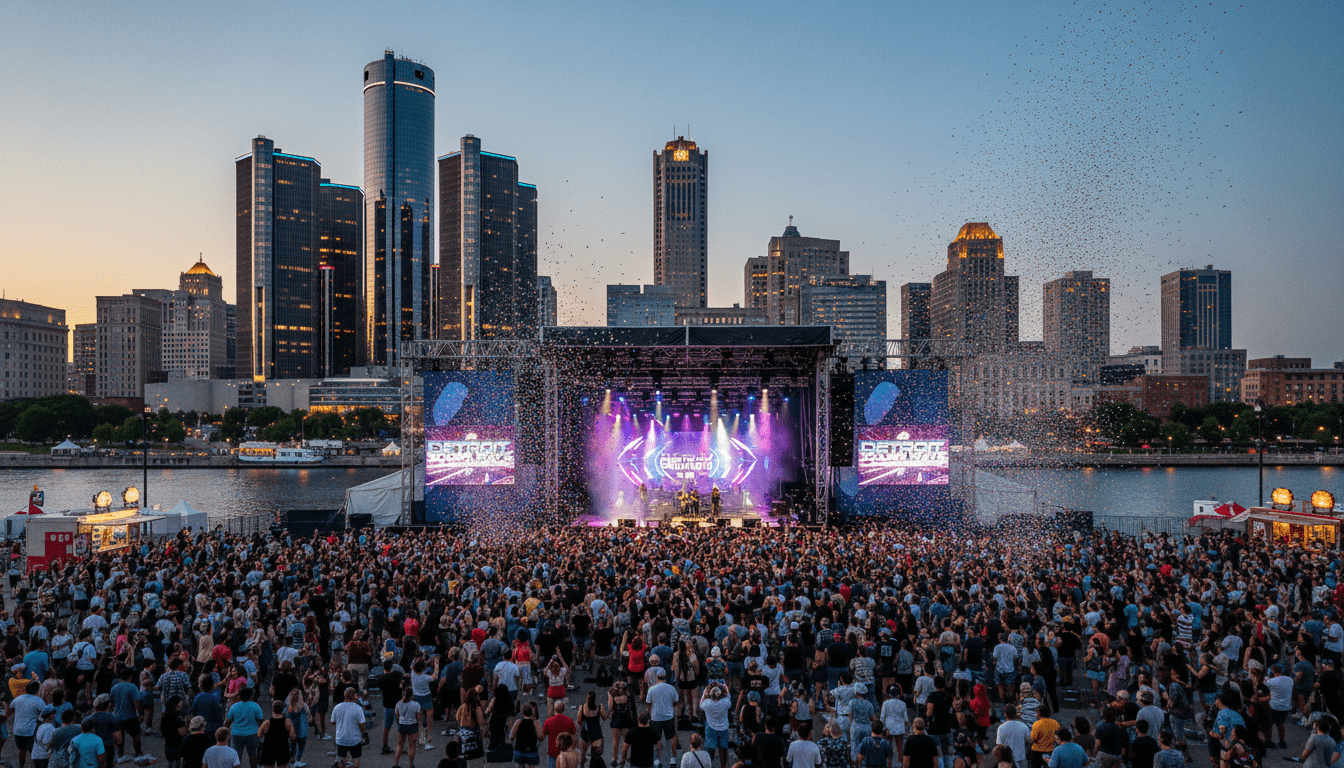
As the city approaches the 2026 summer season, officials and cultural organizers are projecting a record-breaking year for Detroit music festivals. Following several years of post-pandemic recalibration and infrastructure investments along the riverfront, Detroit is poised to solidify its reputation as a global musical destination, with an estimated 20% increase in attendance projected across major events compared to 2024 figures.
Data from the Detroit Metro Convention & Visitors Bureau (Visit Detroit) suggests that the convergence of completed construction projects and expanded festival footprints will generate significant economic activity. However, this growth brings renewed conversations regarding logistics, neighborhood impact, and the preservation of the city’s cultural roots.
A Landscape Transformed by Infrastructure
The 2026 festival season will be the first to fully utilize the completed Ralph C. Wilson Jr. Centennial Park on the West Riverfront. This 22-acre development represents a significant shift in how the city hosts large-scale gatherings. For years, Hart Plaza has served as the concrete heart of Detroit music festivals, hosting anchors like the Movement Electronic Music Festival and the Detroit Jazz Festival.
While Hart Plaza remains central to the city’s identity, the new green space offers a complementary venue capable of hosting boutique festivals and spilling-over crowds. Urban planners and city officials have noted that this dual-venue strategy is designed to alleviate congestion in the central business district while connecting the riverfront more cohesively.
According to the Detroit Riverfront Conservancy, the integration of these spaces allows for a more fluid visitor experience. The expansion is not merely about capacity; it is about diversifying the types of events the city can sustain simultaneously without paralyzing downtown traffic.
The Economic Engine of Culture
The economic implications of a robust 2026 season are substantial. Reports indicate that the hospitality sector is gearing up for higher occupancy rates. Local economists have pointed out that multi-day festivals are among the highest generators of revenue for the city, driving spending not just in ticket sales, but in hotels, dining, and transportation.
In previous years, the Detroit Jazz Festival—the world’s largest free jazz festival—has generated tens of millions in economic impact. With the 2026 expansion plans, that figure is expected to rise. Local business owners in the downtown and Midtown corridors have expressed cautious optimism. Restaurant operators noted that while festival weekends guarantee high revenue, staffing shortages and supply chain predictability remain ongoing challenges that the industry is working to stabilize before the 2026 rush.
Furthermore, the focus is expanding beyond the downtown core. Smaller, community-led festivals in neighborhoods like the North End and Southwest Detroit are receiving increased attention, supported by grants aiming to decentralize tourism dollars. You can read more about neighborhood specific growth in our report on Detroit neighborhood development initiatives.
Movement and Jazz Fest: The Anchors
Despite new entrants to the scene, the pillars of the Detroit music festivals calendar remain the Movement Electronic Music Festival (Memorial Day Weekend) and the Detroit Jazz Festival (Labor Day Weekend). Organizers for both events have hinted at expanded programming for 2026 to honor the city’s musical legacy.
Movement, produced by Paxahau, continues to draw an international audience, cementing Detroit’s status as the birthplace of Techno. Industry analysts observe that as electronic music continues to dominate global charts, the pilgrimage to Detroit becomes increasingly significant for purists and new fans alike. The 2026 iteration is expected to leverage improved transit options, including the extended QLINE services and better integration with the People Mover, to manage the influx of international tourists.
Similarly, the Detroit Jazz Festival Foundation remains committed to keeping their event free, a unique business model that relies heavily on corporate sponsorship and philanthropic support. The 2026 lineup is anticipated to focus heavily on the lineage of Detroit jazz greats, bridging the gap between historical preservation and contemporary innovation.
Impact on Detroit Residents
While the economic forecast is positive, the expansion of Detroit music festivals raises valid concerns for local residents. Issues regarding noise pollution, parking availability, and road closures are frequently debated at City Council meetings. Residents in Lafayette Park and the Central Business District have previously voiced frustration over the sound levels during late-night festival hours.
In response, the City of Detroit has been refining its special events ordinances. Officials state that for the 2026 season, there will be stricter enforcement of decibel limits after 11:00 PM and more robust traffic management plans. The Department of Public Works is expected to deploy additional resources to manage sanitation and road clearing immediately following event weekends to minimize disruption to the workweek.
Moreover, there is a push to ensure that these festivals remain accessible to Detroiters. With ticket prices for private festivals rising due to inflation, community leaders are advocating for discounted “local” passes or dedicated community days to ensure that the revitalization of Detroit’s culture does not price out the people who built it. For more on local infrastructure updates affecting accessibility, see our analysis on Detroit transportation and infrastructure improvements.
What to Expect Next
Looking ahead to the summer of 2026, the trajectory is clear: Detroit is doubling down on its cultural assets as a primary driver of urban renewal. The collaboration between public entities and private promoters suggests a more organized, strategic approach to event management than in previous decades.
Visitors can expect a cleaner, more connected riverfront experience, while residents can anticipate a busy, albeit potentially disruptive, summer season. The success of the 2026 Detroit music festivals will likely serve as a litmus test for the city’s ability to balance large-scale tourism with the livability needs of its growing population.